
To the mausoleum
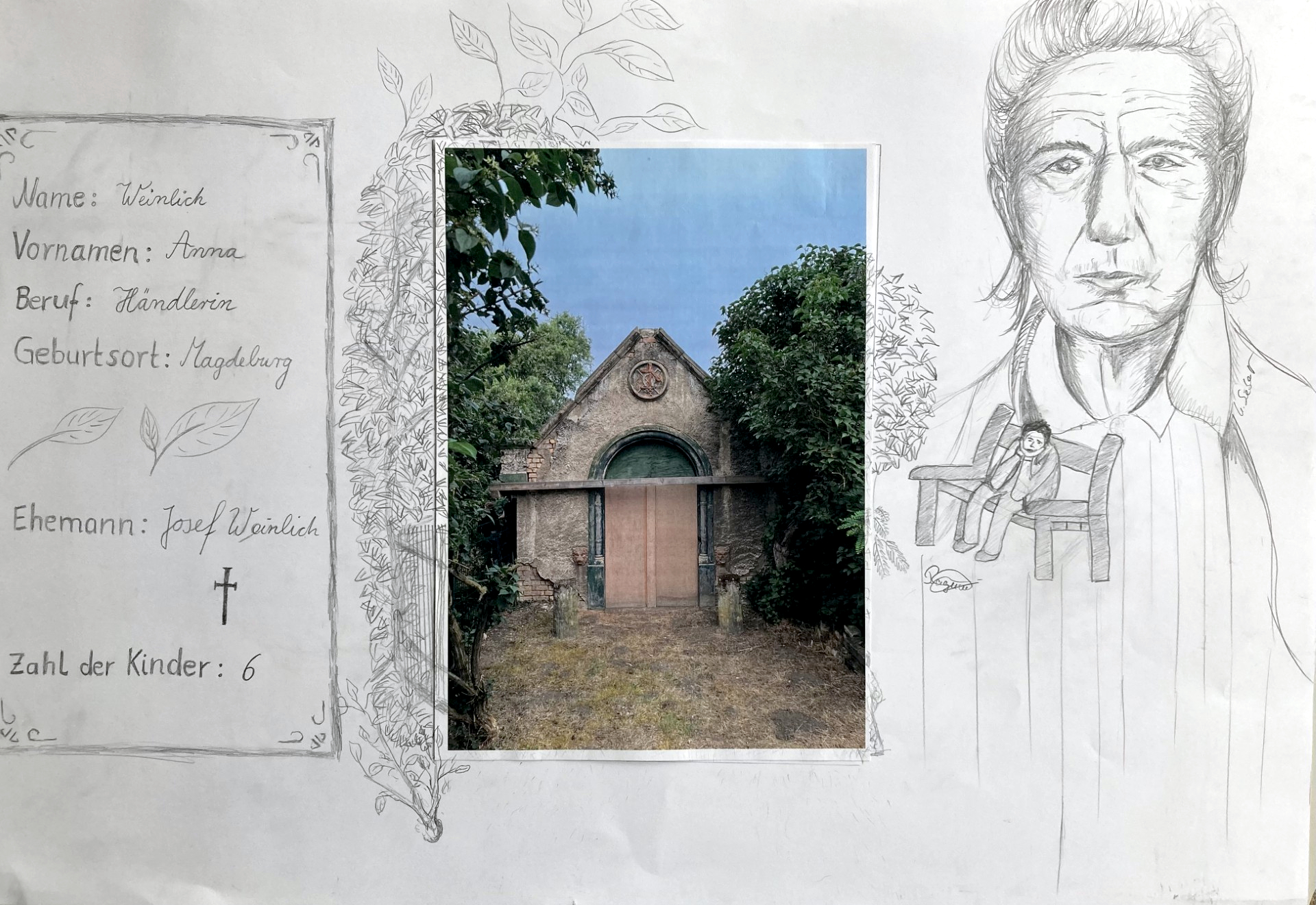
About the location of the mausoleum
Around 1915, Austrian Sinto Josef Weinlich (“Nauni”), a local horse dealer, built the Osendorf Sinti Mausoleum for his family and himself on the former Osendorf municipal cemetery.
The unique burial chapel has been owned by the city of Halle since 2012.
The mausoleum stands isolated on a small green space at Karl-Meißner-Str. 43 in 06132 Halle (Saale), which was formerly part of the Osendorf cemetery.
Today, the area is mainly used as a playground and public open space; the cemetery itself no longer exists, but some of the gravestones can still be seen.
The building is enclosed by a fence. Visits usually only take place as part of programs such as Open Monument Day.
The mausoleum is listed as a cultural monument. Due to structural damage, the building is in poor condition; renovation measures are planned or have already been initiated.
Information signs on site provide information about the history and protection of the building.
About the building
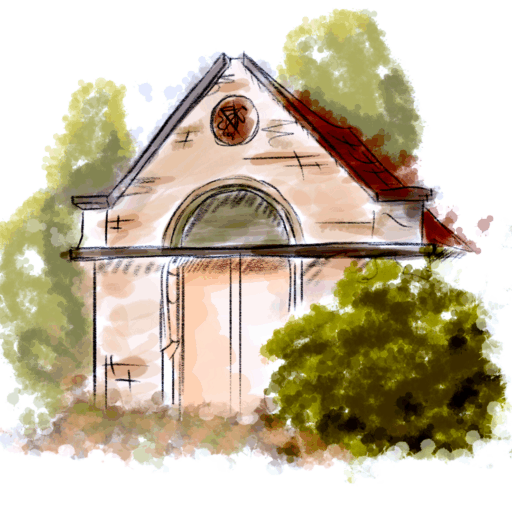
The building is a small stone burial chapel, built around 1915. It is listed in the Saxony-Anhalt register of historical monuments.
The main architectural features of the building are:
- a round-arched portal as a defining element; the portal was the original light opening,
- an entrance flanked by columns and two lion heads as decorative elements,
- a gable crown; the former stone finish is no longer preserved, which has changed the silhouette.
The building features solid masonry with a layer of plaster and paint that was once multicolored. Prolonged deterioration of the structure necessitated emergency safety measures. Renovation in accordance with monument preservation guidelines has now begun.
The building is a rare, authentic, stone testament to Sinti culture in central Germany. It is therefore a local monument and an important place of remembrance.
About the relief on the mausoleum
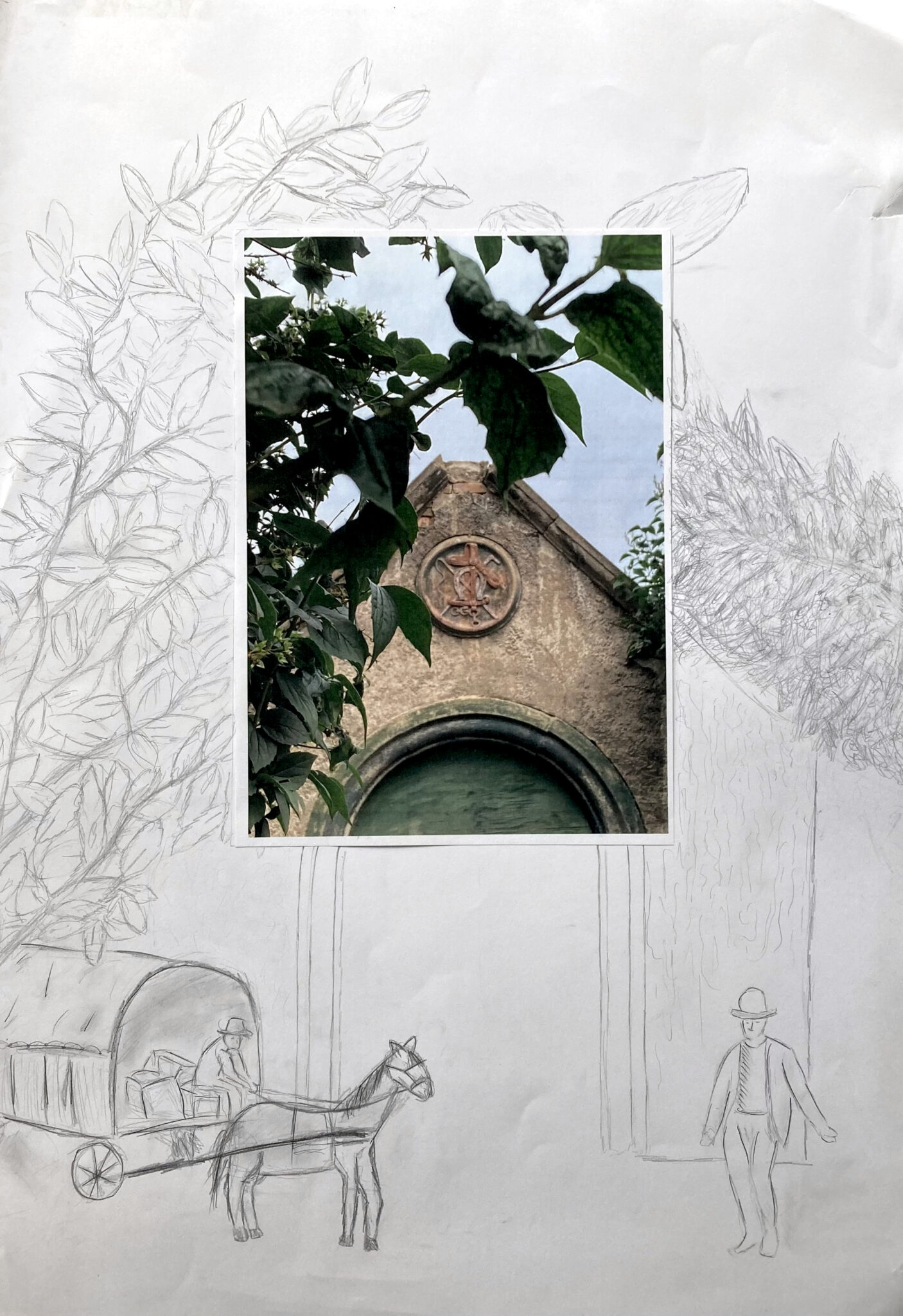
The pediment of the mausoleum features a relief depicting a horseshoe, a curb bit, and a riding crop — symbols of the horse trade and the life of Josef „Nauni“ Weinlich, a respected Sinto and successful merchant from Osendorf.
The significance of the relief:
- from a historical perspective: a testament to Sinti culture in central Germany – rare and authentic;
- from a personal perspective: an expression of pride, dignity, and craftsmanship, the relief is not merely an ornament, but a statement: „I want to be remembered and talked about as a successful horse trader.„
This makes the mausoleum a unique cultural heritage site; it is one of the few buildings created by Sinti themselves. Its preservation is intended to remind and not forget, especially in light of the exclusion, persecution, and genocide under National Socialism. The detail of the relief becomes a memorial that tells of identity, steadfastness, and cohesion.